



 Industry White Paper
Why Customers Disappear After Your Electronic Components Quotation
Understand why buyers disappear after your electronic components quotation. Learn how risk avoidance, trust, and timing affect B2B orders in component distribution.
View full text >More articles
Cross-Border Electronic Component Surplus Recycling: Opportunities, Challenges, Valuation, Bidding, Logistics & Risks in 2026
Market Reaction to Nexperia China’s Independent Wafer Sourcing and Packaging: Analysis of the 2540+ Batch Watershed
Differences Between Murata's Common GCM, GRT and GRM Series MLCCs
Omron Limit Switches: Comprehensive Guide to Products, Classifications, Applications, and Selection
Memory Chip Procurement Decision Guide: Rational Choices Amid Market Bubbles
How Long Can Chips Be Used After Their Date Code (D/C) Expires?





Component Categories
1
2
3
4
News & Information

Top Global Leading EMS & ODM Giants
2026 Global Top 100 EMS & ODM companies ranking with industry definitions, regional distribution, top manufacturers, market insights and supply chain cooperation guide for electronics industry professionals.

Why Customers Disappear After Your Electronic Components Quotation
Understand why buyers disappear after your electronic components quotation. Learn how risk avoidance, trust, and timing affect B2B orders in component distribution.

UAV Complete BOM – Electronic Components
Sales of UAV electronic components are extremely hot in the global market, and many distributors are seeking high-margin models with premium potential. Since drone manufacturers do not fully disclose chip markings and part numbers, this list summarizes commonly used electronic components in drones based on teardown data and public information, including IMUs, MCUs, barometers, RF chips, power management ICs, FPGAs, and motor drivers. Some components listed are general-purpose alternatives widely applied in commercial, industrial, and FPV drones. These devices are in strong demand for flight control, image transmission, positioning, and power regulation, creating obvious premium opportunities for reliable stock and long-term supply.

Cross-Border Electronic Component Surplus Recycling: Opportunities, Challenges, Valuation, Bidding, Logistics & Risks in 2026
In 2026, cross-border recycling of surplus electronic components is operating within a structurally high-boom window: memory chips, automotive-grade ICs, and AI computing chips are in global shortage, second-hand spot goods maintain significant premiums, and cross-border price arbitrage opportunities are substantial. However, this business involves extremely high thresholds in compliance, logistics, testing, and capital, and is by no means risk-free or guaranteed profitable. Below is an in-depth analysis covering market conditions, opportunities, difficulties, full-process operations, profitability, risks, industry trends, and trading models (Lot Buy vs. individual bidding).
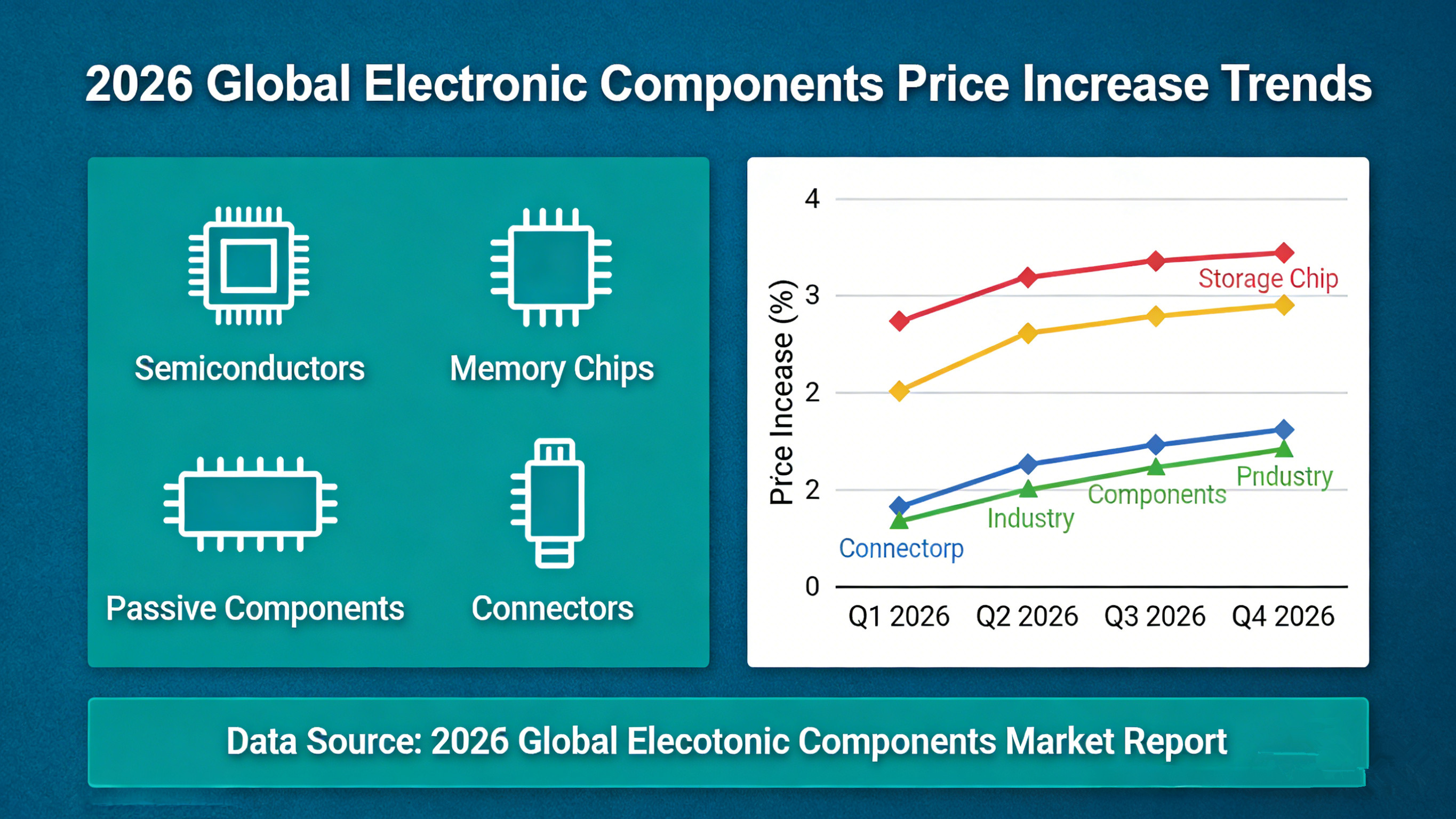
Electronic Component Price Increases – Global Manufacturers (Jan 2026 – Present)
Global electronic component manufacturers have implemented significant price increases from January 2026 to present. This report covers major price hikes across semiconductor (analog, power, MCU), memory (DRAM/NAND), passive components (MLCC, resistors), connectors & sensors, and foundry & electronic materials. Leading brands including TI, ADI, Infineon, Samsung, SK Hynix, Murata, TDK, TE Connectivity, TSMC, and others announced adjustments ranging from 3% to 85%, effective from Q1 2026 onward. Driven by AI server demand, automotive growth, raw material and production costs, the widespread increases affect full product lines, automotive/industrial grades, advanced processes and high-performance components worldwide.
Enter your email address
Site Map
Copy Right © 2010-2026 All Right reserved.